

On Thursday, May 14, 2026, SpectrumX, the U.S. National Science Foundation (NSF) Spectrum Innovation Center, announced the release of its Impact Report for 2021-2025 at a reception in Washington, DC.
The NSF SpectrumX Impact Report showcases the Center’s strategic initiatives and defining achievements from its first four years, including research advancements, evidence-based technical contributions relevant to policymakers, and workforce development activities.
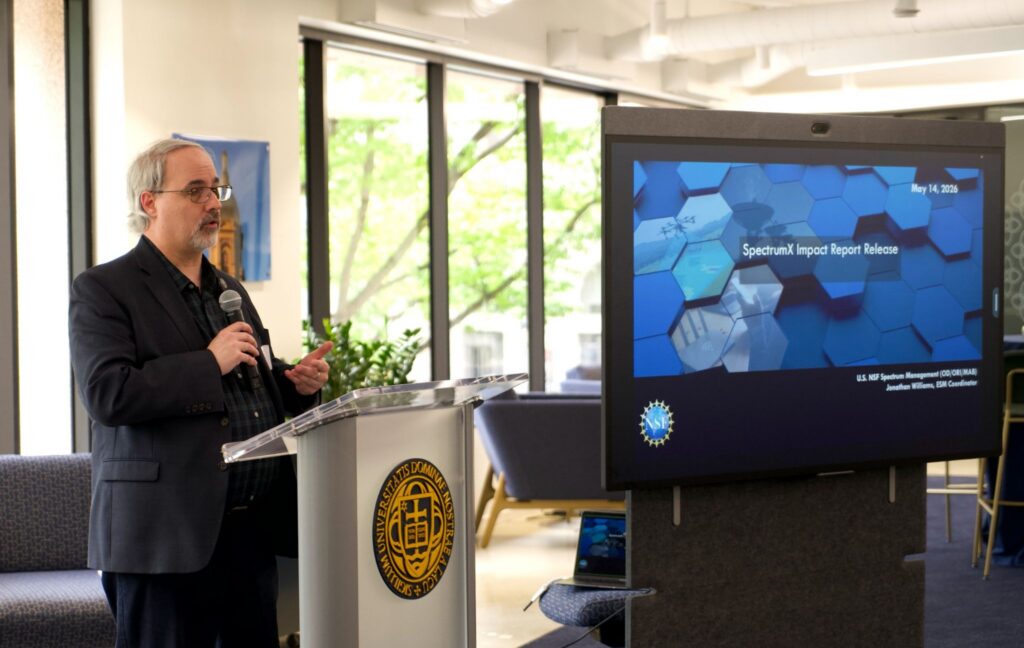
“This Impact Report provides a good summary of the breadth and depth of the work that SpectrumX is doing,” said Jonathan Williams, Program Director of Electromagnetic Spectrum Management at the NSF. “Since its creation, the center has had a growing involvement in multiple areas of the spectrum world, from yearly spectrum community gatherings to research and spectrum workforce development. NSF has been proud to fund this work.”
The event opened with a welcome from representatives from the University of Notre Dame, NSF SpectrumX’s lead institution, followed by remarks from representatives from the NSF, Federal Communications Commission (FCC), and National Telecommunications and Information Administration (NTIA). J. Nicholas Laneman, NSF SpectrumX Center Director, concluded the event by providing highlights from the Impact Report.

“Data-driven spectrum research is a core pillar of wireless policy. SpectrumX is an institution that contributes to that discussion through a unique blend of academic rigor, community outreach, and innovative techniques. The FCC commends SpectrumX for its successes and looks forward to further collaboration,” said Arpan Sura, Senior Counsel to FCC Chairman Brendan Carr and Chief AI Officer.
Founded in 2021, NSF SpectrumX was established through the NSF Spectrum Innovation Initiative (SII) by an initial five-year award and strengthened by a Memorandum of Agreement (MoA) among the NSF, NTIA, and FCC to ensure alignment in addressing national spectrum issues critical to national security and US competitiveness.
This MoA is a unique, multi-agency agreement that enables the Center to approach spectrum-related issues with an unprecedented level of collaboration and relevance to U.S. spectrum interests. This intentional and distinctive strategy has helped facilitate many of NSF SpectrumX’s advancements and achievements outlined in the Impact Report.

“The work SpectrumX is doing, particularly in workforce development, is so important as the need for experts to help manage the increasing competition for spectrum for all users grows,” said Tricia Paoletta, Senior Advisor for Spectrum at NTIA.
In addition to providing highlights from the Center’s first four years, the Impact Report also includes a preview of the significant work currently in progress as well as NSF SpectrumX’s plans for future initiatives that support US national spectrum priorities.
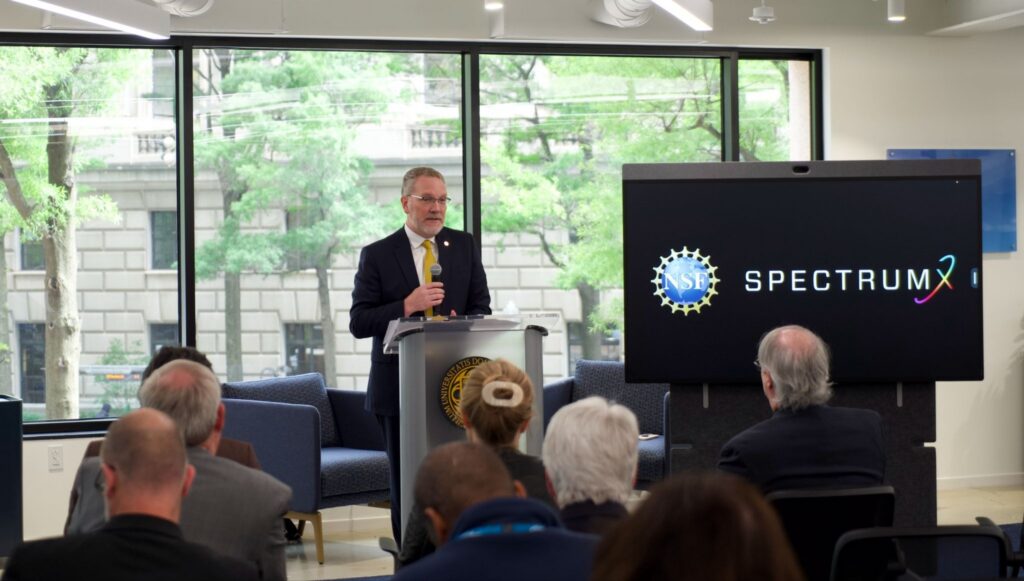
“The spectrum challenges ahead, from satellite constellations to 6G to drones to AI-driven sharing, are only growing in complexity and consequence. They require exactly what SpectrumX has demonstrated it can deliver: objective, interdisciplinary, policy-relevant research at the national scale,” said Laneman.
To read the full Impact Report is now available online. To learn more about NSF SpectrumX, please visit the Center’s website.
About NSF SpectrumX
SpectrumX is funded by the U.S. National Science Foundation (NSF) as part of its Spectrum Innovation Initiative, under grant number AST 21-32700. NSF SpectrumX is the world’s largest academic hub where all radio spectrum stakeholders can innovate, collaborate, and contribute to maximizing social welfare of this precious resource.
To learn more about NSF SpectrumX, please visit spectrumx.org.
Contact:
Stephanie Loney, Research Communications Specialist
NSF SpectrumX / Notre Dame Research / University of Notre Dame
sloney@nd.edu / 574.631.7804
spectrumx.org

