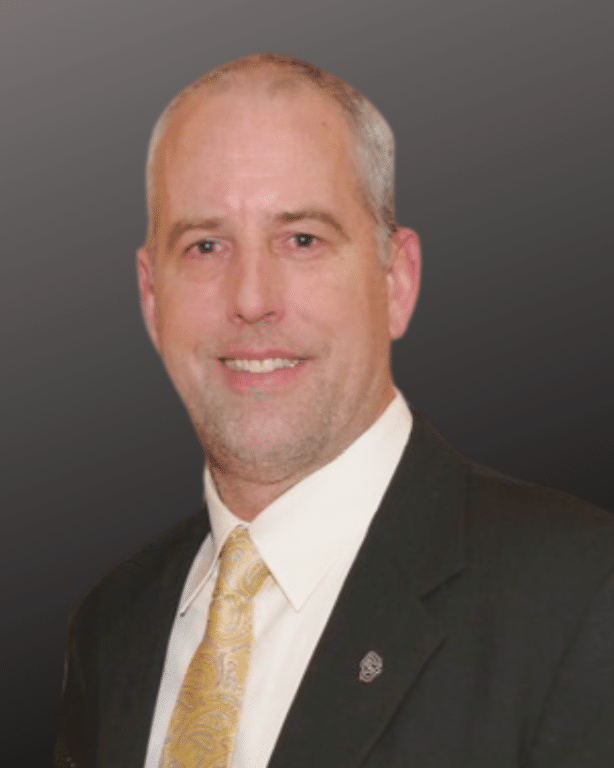
Focus Area

Remote Sensing, Earth, & Space Sciences
Vehicle Systems
Astrodynamics & Satellite Navigation

Education

Ph.D., Electrical Engineering, University of Colorado, 1994
M.S., Electrical Engineering, University of Colorado, 1990
B.S., Electrical and Computer Engineering, Clarkson University, 1987

Professional Experience

2013 – Present, Professor, Aerospace Engineering Sciences, University of Colorado
2014 – 2017, Associate Dean for Research, College of Engineering and Applied Science, University of Colorado
2011 – 2014, Associate Chair for Undergraduate Affairs, Aerospace Engineering Sciences, University of Colorado
2008 – 2013, Associate Professor, Aerospace Engineering Sciences, University of Colorado
2001 – 2008, Assistant Professor, Aerospace Engineering Sciences, University of Colorado
1995 – 1997, Postdoctoral Researcher, National Center for Atmospheric Research, High Altitude Observatory

Awards (selected)

Distinguished Engineering Alumni Award, College of Engineering and Applied Science (2019)
Distinguished Performance, Department of Aerospace Engineering Sciences (2016)
Victor Charles Schelke Endowed Professor (2014)
Outstanding Service, Department of Aerospace Engineering Sciences (2014)
University of Colorado Emerging Leaders Program Fellow (2012)
Erskine Fellowship, University of Canterbury (2009)
NASA Group Achievement Award – TIMED mission (2008)
Dean’s Award for Outstanding Junior Faculty, University of Colorado (2007)
AIAA Rocky Mountain Section Educator of the Year (2007)
College of Engineering & Applied Science Dean’s Award for Outstanding Junior Faculty (2007)
NSF CAREER Award (2005)
Dean’s Teaching Excellence Award (2005)
Sigma Xi Northwest Regional Young Investigator (2004 & 2005)

Research Interests

Design, construction, deployment and operation of small satellite systems.  Remote sensing of the thermosphere and ionosphere.  Meteor radar design and operation.  Arctic and Antarctic UAS measurement systems.

In January 2024, the National Radio Science Meeting celebrated its 50th anniversary. Twelve members of the SpectrumX, the National Science Foundation Spectrum Innovation Center, including two of the center’s students, were in attendance to further national conversations about radio science, telecommunications and electrical engineering. The meeting, hosted by the U.S. National Committee (USNC) of the International Union of Radio Science (URSI) and the National Academies of Science, Engineering and Medicine, took place from January 9-12, and resulted in the discussion of 12 research papers co-authored by SpectrumX members.
In November 2023, the National Telecommunications and Information Administration (NTIA) put out a request for information on the Implementation Plan for the National Spectrum Strategy (NSS). Seventy-five spectrum stakeholders responded to the request, including NSF SpectrumX, the U.S. National Science Foundation’s (NSF) Spectrum Innovation Center.
The University of Colorado Boulder (CU) hosted the National Academies of Science, Engineering, and Medicine (NASEM)’s Committee on Radio Frequencies (CORF) Fall meeting on October 3-4, 2023. CORF considers the needs for radio frequency requirements and interference protection for scientific and engineering research, coordinates the views of U.S. scientists, and acts as a channel for representing the interests of U.S. scientists.
In August, the Federal Communications Commission (FCC) issued a special invitation. In a Notice of Inquiry (NOI), it called upon researchers and others to help the FCC use “today’s tools to understand tomorrow’s commercial spectrum usage.” SpectrumX, a National Science Foundation (NSF) Spectrum Innovation Center, rose to the occasion. It submitted a center NOI comment with ten contributing authors and eight center endorsers.

NSF SpectrumX actively encourages and supports its members to contribute to regulatory and policy proceedings on radio spectrum issues. Center members submit policy comments and testify at congressional hearings to […]

The FWG is currently working with leadership from NSF funded PAWR platforms to determine how SpectrumX can partner with these facilities to conduct relevant spectrum sharing experiments. SpectrumX currently has […]

The first NSF SpectrumX flagship project focuses on developing a combination of tools, infrastructure, and team capabilities to enable the execution of a series of increasingly complex flagship project experiments. […]